
Company
Role
Industry
Company Size

1
My Role
Sole UX Designer
Led UX improvements across the cabinet purchase journey
Analyzed customer behavior and drop-off points
Designed solutions to simplify product selection and configuration
Partnered with product managers and developers to ship improvements
2
Key Challenges
Cabinet styles
Measurements
Pricing
Configuration options
3
My role included taking these steps:
Analyzing behavior data and checkout drop-off points
+
Mapping the cabinet purchase journey
+
Identifying friction in product configuration and cart review
+
Designing improvements to clarify selections and reduce decision complexity
+
4
Simplicity vs Product Flexibility
Customers needed a simple buying experience, but cabinets have many configuration options such as size, finish, and accessories.
Tradoff
Rather than removing options, the design focused on progressively revealing configuration choices to reduce cognitive load while maintaining flexibility.
Purchase Confidence vs Checkout Speed
Adding more detail in the cart (measurements, configuration details, pricing) increased clarity but risked slowing down checkout.
Tradoff
The solution prioritized clear summaries of selections and pricing without overwhelming the user with unnecessary detail.
Measurement Guidance vs User Autonomy
Incorrect measurements could lead to costly returns, but forcing customers through rigid measurement validation could create friction.
Tradoff
The experience focused on reinforcing measurement accuracy and surfacing guidance, while still allowing customers to move forward with their selections.
Product Comparison vs Page Complexity
Helping customers compare cabinet styles was important, but showing too much information at once could overwhelm users.
Tradoff
The design prioritized visual comparison and key differentiators, allowing deeper product details to remain accessible but not dominant.
5
Assumptions
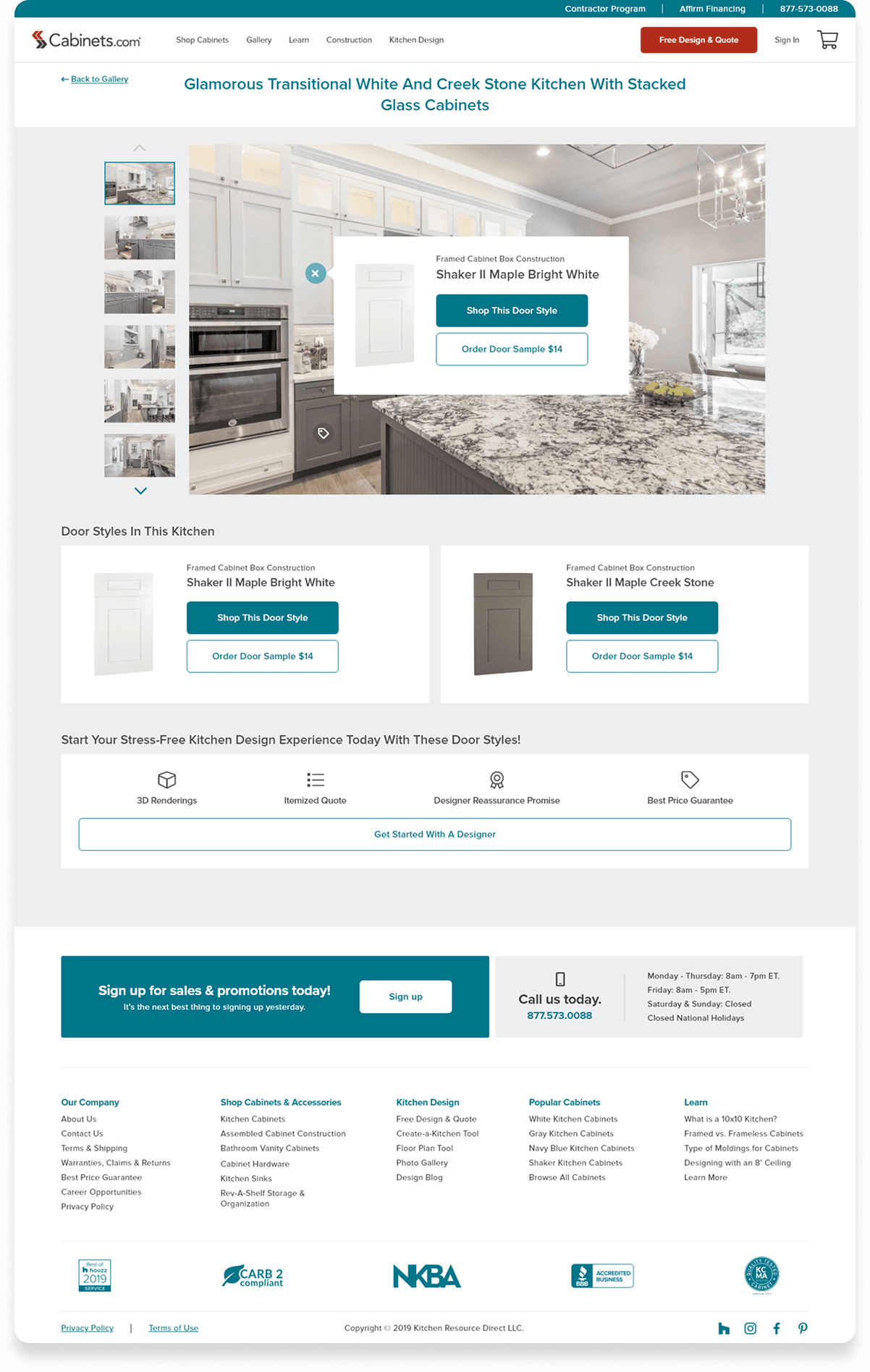
If we connect inspirational kitchen gallery imagery directly to purchasable products (styles, finishes, configurations), customers will feel more confident in selecting cabinets, leading to higher engagement and increased conversion rates.
Challenges
Complex Product Mapping
Performance & Load Times
Balancing Inspiration vs. Usability
Results
+34% Increase in door samples
+7% Increase in non-designer sales
The production cadence of new galleries slowed
Assumptions
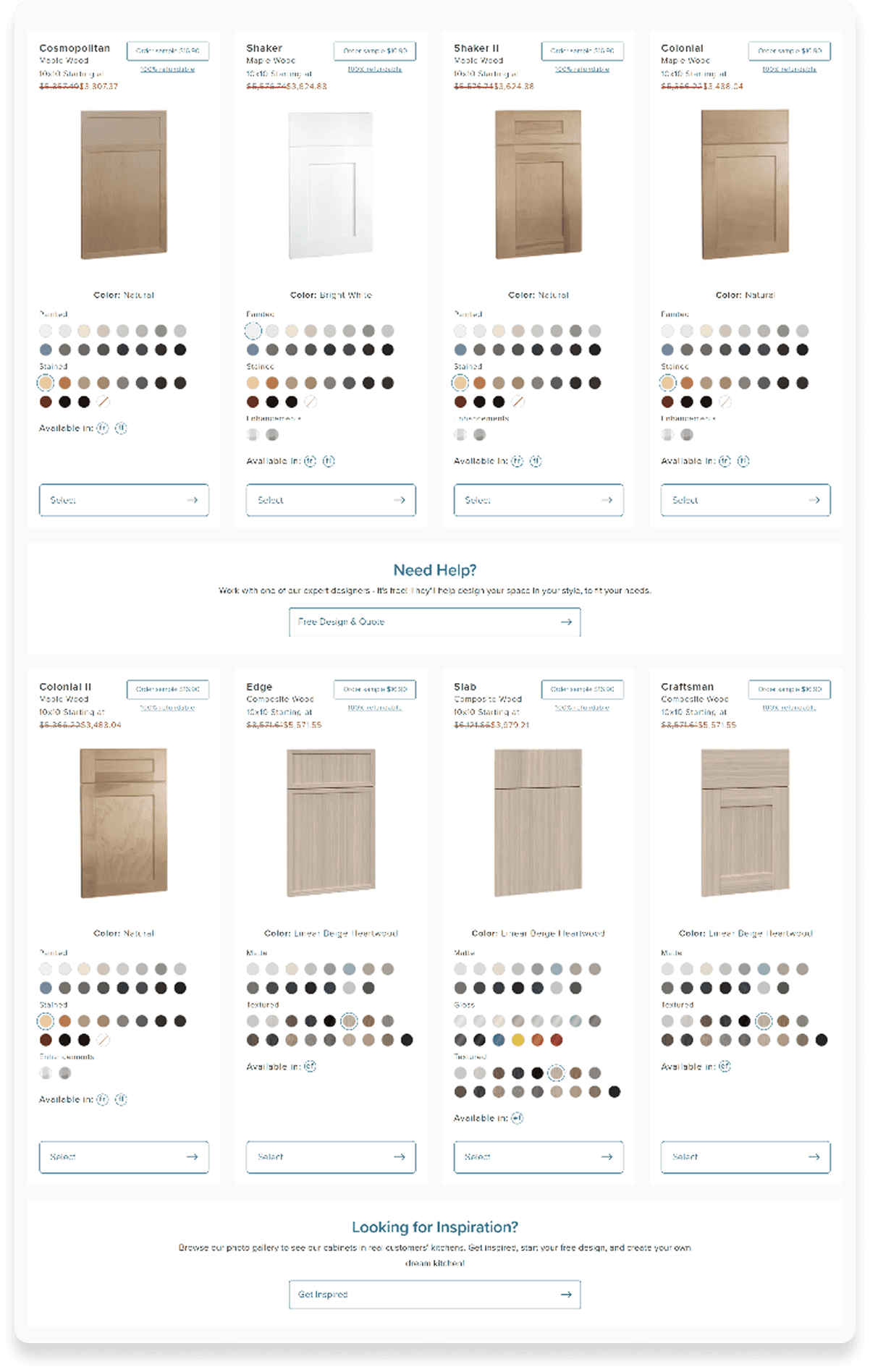
If we integrate more illustrations and contextual visuals into the shopping flow (e.g., cabinet diagrams, lifestyle images, finish swatches), customers will make faster, more confident product decisions, leading to increased engagement and higher conversion rates.
Challenges
Complexity of Choices
Information Hierarchy & Overload
Industry Terminology
Results
+12% Increase in non-designer sales
Help / Resources
Assumptions
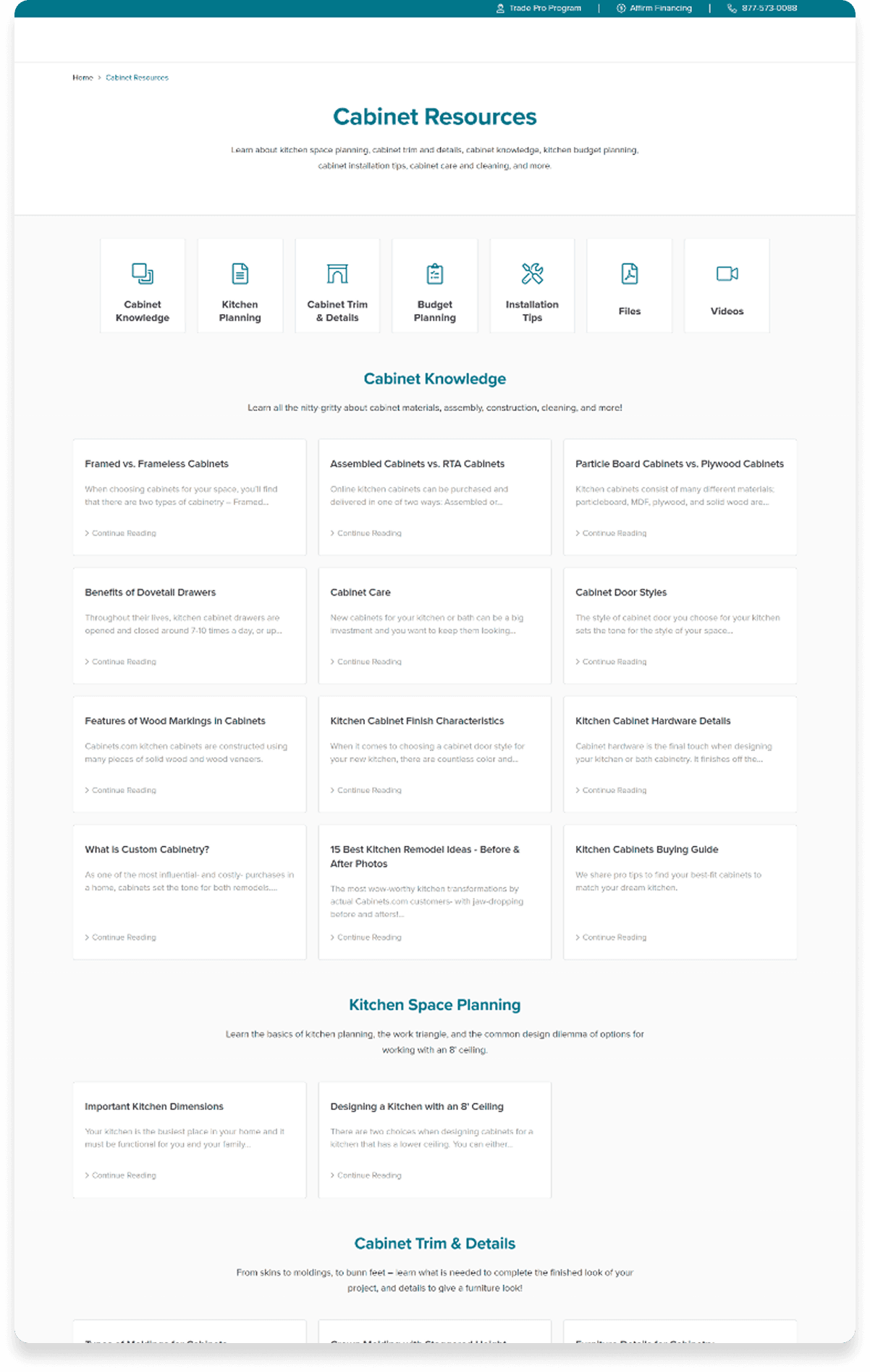
If we create a centralized cabinet resources page with articles, visual guides, and contextual help, customers will gain the knowledge they need to make informed decisions. This will reduce confusion, lower support requests, improve SEO traffic, and ultimately drive higher conversion rates by positioning Cabinets.com as both a retailer and a trusted expert.
Challenges
Balancing Audiences
Avoiding Information Overload
Content Presentation
Results
-18% Decrease in CS calls
Reduced bounce rate from 62% to 47%
6